I Grew My Hair Back… Then Stress and Hormones Took It Away Again

Hair loss is one of the most emotional concerns I see in my practice because I've lived through it myself more than once.

After having my daughter, Grace, my postpartum hair loss was completely different from what I experienced after my son, Luke. This wasn't the typical shedding that many women are told to expect. Instead, I developed large, noticeable patches where my hair simply wasn't growing back.
As someone who spends every day helping others feel confident in their skin, I know firsthand how deeply hair loss can affect your confidence. Every mirror, every ponytail, every photograph became a reminder that something wasn't right.
My Experience with PRP Hair Restoration
After a series of Platelet-Rich Plasma (PRP) treatments, I experienced incredible regrowth in a surprisingly short amount of time. Watching those patches slowly fill in again felt like getting a piece of myself back.
Then life changed again.
I opened Siren Medical Spa.
Between building a business, caring for two children, managing everyday life, and noticing significant hormonal changes in my lab work, I began losing my hair all over again.
Why Do Women Experience Hair Loss?
Many women assume hair loss is simply a cosmetic issue or "just hormones." In reality, healthy hair growth depends on a complex balance of hormones, nutrition, genetics, circulation, inflammation, stress, and overall health.
Some of the most common causes of hair loss in women include:
Postpartum Hormonal Changes
During pregnancy, elevated estrogen levels keep many hairs in the active growth (anagen) phase. After delivery, estrogen levels decline rapidly, causing a larger number of hairs to enter the resting (telogen) phase before shedding several months later. While many women recover naturally, some experience more significant or prolonged thinning that may benefit from evaluation.
Perimenopause and Menopause
As estrogen and progesterone decline during perimenopause and menopause, hair follicles become more susceptible to the effects of androgens. Hair often becomes finer, grows more slowly, and overall density decreases.
Thyroid Disorders
Both hypothyroidism and hyperthyroidism can interrupt the normal hair growth cycle and lead to diffuse thinning.
Iron and Nutritional Deficiencies
Hair is not essential for survival, so when your body lacks nutrients like iron, vitamin D, zinc, vitamin B12, protein, or other key building blocks, it often redirects those resources elsewhere.
Chronic Stress
One of the most common forms of stress-related hair loss is called telogen effluvium. Significant physical or emotional stress can push a large percentage of hair follicles into the resting phase at the same time. The shedding often doesn't begin until two to four months after the stressful event, making it difficult to identify the trigger.
Genetics
Female pattern hair loss affects millions of women and often develops gradually over time. Genetics may influence how sensitive your hair follicles are to hormonal changes throughout life.
Autoimmune Conditions
Conditions such as alopecia areata occur when the immune system mistakenly attacks healthy hair follicles, leading to patchy areas of hair loss.
Medical Conditions and Medications
Certain medications, rapid weight loss, major illness, surgery, PCOS, insulin resistance, and inflammatory scalp conditions can all contribute to thinning hair.
The reality is that many women have multiple contributing factors, which is why a thorough evaluation is so important.
My Next Step: Addressing the Bigger Picture
As I worked through my second episode of hair loss, I began hormone replacement therapy (HRT) with wonderful results. I also became much more intentional about managing my stress and incorporated several non-medical practices that genuinely helped support both my mind and heart.
Even though I felt healthier overall, the hair loss continued.
That's when I decided to pursue treatment again.
How PRP Helps Stimulate Hair Growth
I completed two additional PRP treatments combined with topical INVO exosomes and saw significant improvement, especially along my hairline.
PRP, or Platelet-Rich Plasma, is created by drawing a small sample of your own blood and concentrating the platelets through a centrifuge. Platelets contain hundreds of growth factors and signaling proteins that play an important role in tissue repair and regeneration.
When PRP is injected into the scalp, your own growth and healing factors are thought to:
Stimulate dormant or weakened hair follicles
Improve blood flow around the follicle
Prolong the active (anagen) growth phase
Support thicker, healthier hair shafts
Reduce miniaturization of existing follicles
While PRP doesn't create brand-new hair follicles, it may help revive follicles that are still alive but producing thinner, weaker hair. Research suggests it tends to work best for early to moderate thinning, and most patients require an initial series of treatments followed by periodic maintenance.
What Are Topical INVO Exosomes?
INVO topical exosomes are FDA approved microscopic extracellular vesicles naturally released by cells. Think of them as tiny biological messengers that carry proteins, growth factors, lipids, and genetic signaling molecules from one cell to another.
When used as a topical treatment after procedures such as microneedling or PRP, exosomes are thought to help support the scalp's natural healing response by:
Encouraging communication between healthy cells
Supporting tissue repair
Reducing inflammation
Creating an environment that may promote healthier follicle function
Early research into exosome therapy for hair restoration is encouraging, but it's important to recognize that this is still an evolving field. While many providers, including myself, have seen promising clinical outcomes, larger studies are still underway to better define long-term effectiveness, ideal treatment protocols, and which patients benefit most.
Protecting the Hair You Regrow
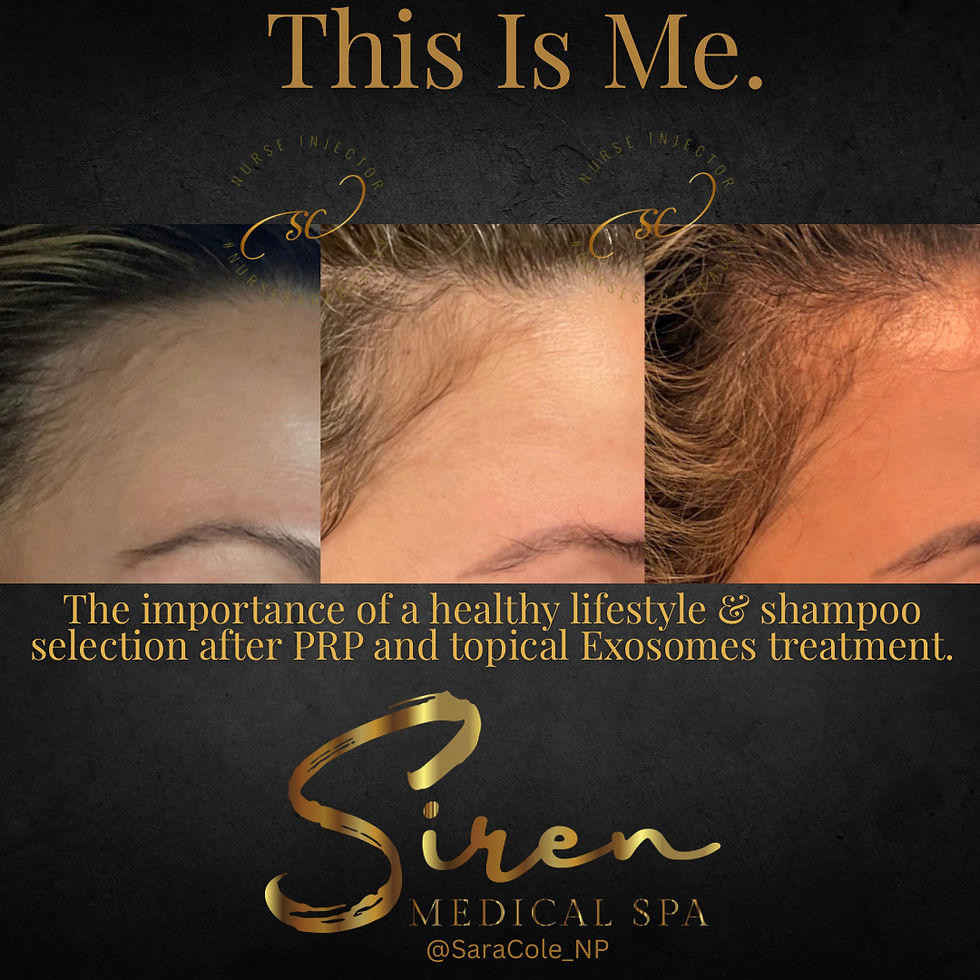
This time, I realized I didn't just want to regrow my hair.
I wanted to protect it.
That meant focusing on healthy daily habits that support both my scalp and my overall health.
For me, that has included:
Supporting a healthier mind through intentional stress management
Optimizing my hormone health with appropriate medical guidance
Filtering the hard water in our home
Using products that help maintain a healthy scalp environment
One change that surprised me was installing a Jolie filtered showerhead. Hard water can leave mineral deposits on the scalp and hair shaft, contributing to dryness, irritation, dullness, and increased breakage in some people. While a filtered showerhead isn't a treatment for hair loss itself, reducing mineral exposure may help improve overall hair and scalp health.
I've also been very happy using Etaderm Hair Growth Shampoo and Conditioner, which focuses on supporting a healthier scalp environment. While no shampoo alone can reverse hormonal or genetic hair loss, maintaining a healthy scalp is an important part of a comprehensive hair restoration plan.
You can learn more about both products here:
Jolie Filtered Showerhead: https://jolieskinco.com/products/the-jolie-showerhead
Etaderm Hair Growth Shampoo & Conditioner: https://etaderm.com/products/organic-hair-growth-shampoo-conditioner
*This is not sponsored, and I don't receive commission from either company—although, considering how many patients I've referred, maybe they should start paying me. 😂
Hair Loss Has a Story
One of the biggest lessons I've learned—both personally and professionally—is that hair loss is rarely "just hair."
It can be a reflection of hormones, stress, inflammation, nutrition, genetics, medical conditions, or several of these working together. That's why I believe the best treatment plans begin with listening.
At Siren, we don't simply focus on replacing hair.
We work to understand why it's happening in the first place.
If you're experiencing increased shedding, thinning, widening of your part, a receding hairline, or simply feel like your hair isn't what it used to be, I'd love to sit down with you, hear your story, and help you better understand your options.
Because every woman deserves answers—not just another shampoo recommendation.

Comments